Last fall I was able to right an article about my trip to the Beijing Olympics in the Rice Standard. In it I described my trip and what I saw in the broader context of the unfolding story of China. It's a fairly large .pdf file, as it includes several photographs we took while we were in Beijing. Check out the article here.
I intend this to be the (very late) final post on this blog. My next trip is to China's next-door neighbor and fellow Asian megapower, India. My blog for that trip is here. Check it out!
Wednesday, June 3, 2009

Thursday, August 21, 2008
Pictures from Beijing

 I'll start with the events, and I'll have links to even more pictures. Our first event was the women's 200m butterfly (along with the finals of the men's 200m breaststroke, the men's 100m freestyle, and the women's 4x100m free relay and the semifinals of the 200m IM).
We also were able to see Elaine's butterfly leg in the prelims of the 4x100m medley relay. Given that the Americans qualified third and won a silver medal, I'd say she did pretty well.
Our next event was at the National Stadium, where we saw the 100m dash. In that race, Usain Bolt took gold and broke the world record in the process at 9.69 seconds.
The next race was rowing. That happened to be the only event where we watched the Americans win a gold medal (and hearing our national anthem). Note that we were quite far away from the medal stand, so the pictures weren't as good. Anyway, pictured is the gold medal-winning women's eight.


Next we were able to go see the women's triathlon, which was really good, given that my dad is a triathlete and a fan of the sport. American Laura Bennett came in fourth, but it was still a fun event (especially for an event not conducive to being a spectator sport).
The final event we got to see was a set of preliminary events in the athletics at the Birds Nest Stadium. Most of the events were javelin, long jump, etc., which are a bit hard to capture on photo. I decided to post a photo of a Bahrainian athlete, which, for obvious reasons, stands out.
More pictures later!


Wednesday, August 20, 2008
Back from Beijing: The end of the trip.
Well, after 36 hours of travel, I'm safely back at home in Lexington, Kentucky. In short, it really was an amazing trip. As I've been away from the internet for the past 60 hours or so, I'll try to sum up everything that's happened since the last time I posted Monday night, Beijing time.
Monday night was really our first excursion on our own to get true Chinese food. It turned out all right, though it became quickly apparent why we hadn't gone out to eat more often. Quite simply, Beijing waiters and waitresses really haven't mastered the English language (and we haven't exactly mastered Mandarin, either). In any case, we had our (second) taste of real Chinese food. This time, it was the Beijing specialty: Peking duck. Aside from having a duck's head cut in two pieces set on a plate in front of us (cooked, at least...but still very clearly a duck's head), it wasn't too bad.
Tuesday morning, our last day in Beijing, we managed to get tickets through the company who organized our Beijing trip, Roadtrips for the preliminary rounds of Athletics. Our assigned seats were in "Tier 4," which we figured was probably the section above the nosebleed section. We were in for a pleasant surprise when we walked into a luxury box. Not bad! I have to give Roadtrips credit: they built a fantastic package for us, so if you ever wanted to go to a major sporting events (the Olympics, the Super Bowl, World Cup, etc.), this is the organization to do it with.
 We came back to our hotel in order to check out and met up with Elaine and two of her teammates (Matt Grevers and Nathan Adrian) to go visit the Summer Palace in Beijing. There is the Tower to Buddhist Incense (pictured) built on top of a huge hill which offers a fantastic view of Beijing (so long as it's a clear day). In addition, we saw the Marble Boat (pictured), constructed by the Empress Dowager Cixi in 1893 with funds earmarked for the Imperial Navy. And no, the Marble Boat most certainly does not float.
I've successfully uploaded two pictures on this blog post. I promise: this is the last blog post without significant numbers of pictures or links to an album of pictures. I've got lots more stuff coming, as I'll post pictures, other stuff we learned while in Beijing, and a little bit of perspective on what's happened thus far. I'm hoping to get another blog off later tonight, but that will depend on how much Olympics I watch and how late I can stay up (I've been up for about 26 hours, and began traveling from Beijing about 40 hours ago).
Monday night was really our first excursion on our own to get true Chinese food. It turned out all right, though it became quickly apparent why we hadn't gone out to eat more often. Quite simply, Beijing waiters and waitresses really haven't mastered the English language (and we haven't exactly mastered Mandarin, either). In any case, we had our (second) taste of real Chinese food. This time, it was the Beijing specialty: Peking duck. Aside from having a duck's head cut in two pieces set on a plate in front of us (cooked, at least...but still very clearly a duck's head), it wasn't too bad.
Tuesday morning, our last day in Beijing, we managed to get tickets through the company
 who organized our Beijing trip, Roadtrips for the preliminary rounds of Athletics. Our assigned seats were in "Tier 4," which we figured was probably the section above the nosebleed section. We were in for a pleasant surprise when we walked into a luxury box. Not bad! I have to give Roadtrips credit: they built a fantastic package for us, so if you ever wanted to go to a major sporting events (the Olympics, the Super Bowl, World Cup, etc.), this is the organization to do it with.
 We came back to our hotel in order to check out and met up with Elaine and two of her teammates (Matt Grevers and Nathan Adrian) to go visit the Summer Palace in Beijing. There is the Tower to Buddhist Incense (pictured) built on top of a huge hill which offers a fantastic view of Beijing (so long as it's a clear day). In addition, we saw the Marble Boat (pictured), constructed by the Empress Dowager Cixi in 1893 with funds earmarked for the Imperial Navy. And no, the Marble Boat most certainly does not float.
I've successfully uploaded two pictures on this blog post. I promise: this is the last blog post without significant numbers of pictures or links to an album of pictures. I've got lots more stuff coming, as I'll post pictures, other stuff we learned while in Beijing, and a little bit of perspective on what's happened thus far. I'm hoping to get another blog off later tonight, but that will depend on how much Olympics I watch and how late I can stay up (I've been up for about 26 hours, and began traveling from Beijing about 40 hours ago).
Monday, August 18, 2008
From Beijing: Day 5
Well, this is the last full day in Beijing, and we be began it by going to the women's triathlon. As an explanation, we went to that event because my dad really likes triathlon, and the men's triathlon isn't until after we leave. In any case, the three Americans came out of the water in the top eight, and Laura Bennett was the first athlete onto the bike portion. All three Americans stayed with the lead pack until the run. During the run, the Australians literally ran away with the gold medal (as well as the bronze). Portugal took the silver medal, and American Laura Bennett finished fourth. All three Americans managed to make it into the top 20.
In other Olympic news, the United States track and field team seems to be doing rather poorly: a bronze in the men's 100m, and absent from the women's 100m. In addition, none of the Americans (one of whom, Bernard Lagat, was a contender for the gold medal) made it to the finals of the men's 1500m. One of the marquee events for the Chinese, the men's 110m hurdles, turned out to be a major disappointment when Chinese superstar Liu Xiang didn't even race in the prelims due to an Achilles injury. Liu was the gold medalist in Athens, and is perhaps one of the biggest Chinese sports stars (along with Yao Ming of basketball and Guo Jingjing of diving). The Chinese have literally been waiting for four years to see Liu defend his Athens gold medal.
Some things to watch over the final week of the Olympics include the 400m dash, where the Americans hope to sweep the medals, as they did in Athens, the women's open water swim on Wednesday, where Natalie du Toit of South Africa will compete...without her left leg. The United States men's basketball team looks to complete its "Redeem Team" image, and Misty May-Treanor and Kerri Walsh of the United States women's beach volleyball team look to defend their Athens gold medal.
Tonight's dinner will be Peking duck, the iconic dish of Beijing Chinese food. We'll see what that ends up tasting like. Anyway, my battery continues to die, so for today it's so long from Beijing. Tomorrow we may be going to the morning session of Athletics at National Stadium, and then tomorrow evening we head off for Seoul.
In other Olympic news, the United States track and field team seems to be doing rather poorly: a bronze in the men's 100m, and absent from the women's 100m. In addition, none of the Americans (one of whom, Bernard Lagat, was a contender for the gold medal) made it to the finals of the men's 1500m. One of the marquee events for the Chinese, the men's 110m hurdles, turned out to be a major disappointment when Chinese superstar Liu Xiang didn't even race in the prelims due to an Achilles injury. Liu was the gold medalist in Athens, and is perhaps one of the biggest Chinese sports stars (along with Yao Ming of basketball and Guo Jingjing of diving). The Chinese have literally been waiting for four years to see Liu defend his Athens gold medal.
Some things to watch over the final week of the Olympics include the 400m dash, where the Americans hope to sweep the medals, as they did in Athens, the women's open water swim on Wednesday, where Natalie du Toit of South Africa will compete...without her left leg. The United States men's basketball team looks to complete its "Redeem Team" image, and Misty May-Treanor and Kerri Walsh of the United States women's beach volleyball team look to defend their Athens gold medal.
Tonight's dinner will be Peking duck, the iconic dish of Beijing Chinese food. We'll see what that ends up tasting like. Anyway, my battery continues to die, so for today it's so long from Beijing. Tomorrow we may be going to the morning session of Athletics at National Stadium, and then tomorrow evening we head off for Seoul.
Sunday, August 17, 2008
From Beijing: Day 4
Well, another day in Beijing has come and gone. It's hard to believe that tomorrow is my last full day in Beijing, since it's been quite an experience.
This morning started with a trip to the television to watch Michael Phelps win gold medal number eight and complete one of the most dominating performances in sports history. In addition, the women's 4x100m medley relay captured the silver medal, earning Elaine a silver medal by swimming in the prelims Friday.
After watching Phelps and Co, we headed out to the rowing venue (it has an official name--but I can't pronounce it...like just about every other place here in Beijing), about 30km northeast of the Olympic Green near the airport. We were able to watch seven different finals, from double skulls to the marquee rowing event, the women's and men's eight. That would be eight rowers and a coxswain, each with one scull (for those familiar with rowing, forgive my ignorance). By the way, if you wish to be kept in suspense in hopes that NBC will air rowing delayed this afternoon (the 17th), I'd suggest you pause reading this until a bit later.
The one thing we had been unable to see in either swimming or track and field was an American gold medal. We wanted to see the American flag go up to the tune of the Star Spangled Banner, and while we saw several semifinal events that the Americans would go on to win, we had only heard Russian, Ethiopian, Japanese, French, etc. national anthems. Going into the final two events, we could add Dutch, British, Danish, Chinese, and Polish national anthems. Then came the final two events: men's and women's eight. The American women managed to start strong and hold onto first the entire way and win the gold medal. While the American men weren't able to make a sweep, they still captured the bronze medal behind the medal-deprived (at least in comparison to China and the United States) Canadians.
Speaking of the number of medals, it may be interesting to note that while in the United States we tally up the total number of medals and rank that way, you will never see that ranking in China. The United States is perpetually in second place, even though we outrank China in terms of the total number of medals, as China has more gold medals than we do. In fact, China hardly cares for the silver and bronze medals: it's the gold medals they really care about.
Anyway, my battery has dipped still farther, which, given that I am absent a working power cord, makes sense, but as I need this computer to work for three more days sans power cable, I'm signing off from Beijing. More to come tomorrow!
This morning started with a trip to the television to watch Michael Phelps win gold medal number eight and complete one of the most dominating performances in sports history. In addition, the women's 4x100m medley relay captured the silver medal, earning Elaine a silver medal by swimming in the prelims Friday.
After watching Phelps and Co, we headed out to the rowing venue (it has an official name--but I can't pronounce it...like just about every other place here in Beijing), about 30km northeast of the Olympic Green near the airport. We were able to watch seven different finals, from double skulls to the marquee rowing event, the women's and men's eight. That would be eight rowers and a coxswain, each with one scull (for those familiar with rowing, forgive my ignorance). By the way, if you wish to be kept in suspense in hopes that NBC will air rowing delayed this afternoon (the 17th), I'd suggest you pause reading this until a bit later.
The one thing we had been unable to see in either swimming or track and field was an American gold medal. We wanted to see the American flag go up to the tune of the Star Spangled Banner, and while we saw several semifinal events that the Americans would go on to win, we had only heard Russian, Ethiopian, Japanese, French, etc. national anthems. Going into the final two events, we could add Dutch, British, Danish, Chinese, and Polish national anthems. Then came the final two events: men's and women's eight. The American women managed to start strong and hold onto first the entire way and win the gold medal. While the American men weren't able to make a sweep, they still captured the bronze medal behind the medal-deprived (at least in comparison to China and the United States) Canadians.
Speaking of the number of medals, it may be interesting to note that while in the United States we tally up the total number of medals and rank that way, you will never see that ranking in China. The United States is perpetually in second place, even though we outrank China in terms of the total number of medals, as China has more gold medals than we do. In fact, China hardly cares for the silver and bronze medals: it's the gold medals they really care about.
Anyway, my battery has dipped still farther, which, given that I am absent a working power cord, makes sense, but as I need this computer to work for three more days sans power cable, I'm signing off from Beijing. More to come tomorrow!
Saturday, August 16, 2008
From Beijing: Day 3
So here's the big question. Was Tyson Gay able to fend off his Jamaican rivals, Asafa Powell and Usain Bolt? Was there a new world record in the 100m dash at National Stadium tonight? In other words, who won the 100 meter dash??? Well, read on if you want to know now. Otherwise, wait until tonight to watch it on NBC. In any case, you have fair warning about the "spoilers" coming. I guess that's the problem of having to air an event like the 100m dash during prime time in the US, when Beijing is 12 hours ahead of the East Coast.
Tonight should be an amazing night on television. Not only do you have the 100m dash, but Michael Phelps goes for gold medal number eight (and world record number seven) live. Also, Dara Torres will look to bring home gold in the 50m freestyle, and the women's 4x100m medley relay will look to take gold from the heavily favored Aussies.
If you live in a cave, you might want to know that swimmer Michael Phelps is completing one of the greatest feats in all of the history of sports. He's going for eight gold medals in a single Olympics, a feat never done before. What makes it more impressive is that he set world records in his first six events (and doubtless, the world record in the 4x100 medley relay will be broken too). He certainly has a knack for making it spectular, first with the 4x100m freestyle relay, which ended in a photo finish against the heavily-favored and smack-talking French, and second by outtouching Serbian Milorad Cavic by a single hundredth of a second in the 100m butterfly. The rest are simply new world records. He is quite possibly the greatest athlete we've ever seen. In any case, his 2008 Olympics end tomorrow morning in Beijing.
Now, what did happen in the 100m dash? Toward the beginning of the evening, they raced in the semifinals. Walter Dix easily made it through to the finals, as did all three Jamaicans (including world record holder Usain Bolt and former world record holder Asafa Powell). In the second heat, Tyson Gay came in fifth in his heat. Only the top four advance, and America's best hope in the 100m was dashed. After enduring shot put, javelin throwing, long jump qualifying rounds, and several preliminary races of varying lengths (including five heats of women's heptathlon 800m races), we came to the Olympics' marquee event, the 100m dash.
Usain Bolt started out fast--very fast, and was clearly in control of the entire race, and won easily. What made his victory so special was not how he won, but how fast he won: 9.69 seconds, a new world record. Richard Thompson of Trinidad and Tobago won second, and American Walter Dix kept the Americans on the podium for the third straight Olympics.
Seeing the Bird's Nest Stadium was truly spectacular, especially at night (I finally got a picture put up of the stadium at night). In fact, the entire Olympic Green lit up at night is quite specacular. Indeed, the design can only truly be appreciated when seen in person.
I'm watching my battery life slowly disinigrate, and as I have three more days in Beijing, I must sign off for now. Good night from Beijing!
Tonight should be an amazing night on television. Not only do you have the 100m dash, but Michael Phelps goes for gold medal number eight (and world record number seven) live. Also, Dara Torres will look to bring home gold in the 50m freestyle, and the women's 4x100m medley relay will look to take gold from the heavily favored Aussies.
If you live in a cave, you might want to know that swimmer Michael Phelps is completing one of the greatest feats in all of the history of sports. He's going for eight gold medals in a single Olympics, a feat never done before. What makes it more impressive is that he set world records in his first six events (and doubtless, the world record in the 4x100 medley relay will be broken too). He certainly has a knack for making it spectular, first with the 4x100m freestyle relay, which ended in a photo finish against the heavily-favored and smack-talking French, and second by outtouching Serbian Milorad Cavic by a single hundredth of a second in the 100m butterfly. The rest are simply new world records. He is quite possibly the greatest athlete we've ever seen. In any case, his 2008 Olympics end tomorrow morning in Beijing.
Now, what did happen in the 100m dash? Toward the beginning of the evening, they raced in the semifinals. Walter Dix easily made it through to the finals, as did all three
 Jamaicans (including world record holder Usain Bolt and former world record holder Asafa Powell). In the second heat, Tyson Gay came in fifth in his heat. Only the top four advance, and America's best hope in the 100m was dashed. After enduring shot put, javelin throwing, long jump qualifying rounds, and several preliminary races of varying lengths (including five heats of women's heptathlon 800m races), we came to the Olympics' marquee event, the 100m dash.
Usain Bolt started out fast--very fast, and was clearly in control of the entire race, and won easily. What made his victory so special was not how he won, but how fast he won: 9.69 seconds, a new world record. Richard Thompson of Trinidad and Tobago won second, and American Walter Dix kept the Americans on the podium for the third straight Olympics.
Seeing the Bird's Nest Stadium was truly spectacular, especially at night (I finally got a picture put up of the stadium at night). In fact, the entire Olympic Green lit up at night is quite specacular. Indeed, the design can only truly be appreciated when seen in person.
I'm watching my battery life slowly disinigrate, and as I have three more days in Beijing, I must sign off for now. Good night from Beijing!
Friday, August 15, 2008
From Beijing: Day 2
So here's another day from Beijing. Today the weather was absolutely amazing. There was a blue sky (probably complements of all the rain we had yesterday which cleaned up the air). The weather was pleasant enough (mid-80's, maybe?), and the humidity was down. As such, it was an absolutely perfect day to visit the Ming Tombs and the Great Wall of China.
So we did, and we had a great time. The Ming Tombs are impressive, if only because they're very peaceful and beautiful. "Tombs" is a bit of a misnomer, since we saw no tombs and no bodies. The closest we got was a sort of mausoleum, as well as the "Sacred Way" which is a set of roads leading up to the tombs. It was the first of two World Heritage Sites.
The other, of course, was the Great Wall of China. My first impression of the Great Wall is "busy." Indeed, it was wall-to-wall people. For that, I have a list of the top 5 ways to make life difficult for other visitors on the Great Wall:
Anyway, we managed to get two tickets for the prelims of the 4x100 medley relays, which Elaine was able to swim the 100m butterfly leg in. She and her American teammates did quite well, qualifying third for the finals Sunday morning (Saturday night in the US). The lineup will probably be Natalie Coughlin for the backstroke, Rebecca Soni in the breastroke (who claimed the gold medal and the world record over Australia's Leisal Jones), Christine Magnuson in the butterfly (the silver medalist and American record holder), and perhaps Dara Torres for the freestyle (who has the fastest 100m split in history). The competition will be from the Australians, who hold the world record.
The men's 4x100m medley relay team qualified first for the finals, and will lead out world record holder Aaron Piersol in the backstroke, former world record holder Brendan Hansen in the breastroke, world record holder Michael Phelps in the butterfly, and Jason Lezak in the freestyle (who holds the fastest 100m relay split in history).
Sorry about the lack of pictures...it takes up too much time to upload it to the server from here in China. We have a lot, but for most of them they'll have to wait until we get back from China.
My battery allotment for the day is up, so I'll post more tomorrow. I'll also be posting some recaps of stuff I didn't get to here later on.
So we did, and we had a great time. The Ming Tombs are impressive, if only because they're very peaceful and beautiful. "Tombs" is a bit of a misnomer, since we saw no tombs and no bodies. The closest we got was a sort of mausoleum, as well as the "Sacred Way" which is a set of roads leading up to the tombs. It was the first of two World Heritage Sites.
The other, of course, was the Great Wall of China. My first impression of the Great Wall is "busy." Indeed, it was wall-to-wall people. For that, I have a list of the top 5 ways to make life difficult for other visitors on the Great Wall:
- Bring an umbrella, and, like most Chinese people, be shorter than me so that the prongs of the umbrella are right at eye level.
- Stop for pictures at inopportune places to take pictures (think Asians and photographs)
- Stop for a picnic in the middle of the Great Wall.
- Walk extra slowly up the Great Wall.
- Be a VIP so that you get a motorcade and the Wall all to yourself, so that you stop anyone from getting out.
Anyway, we managed to get two tickets for the prelims of the 4x100 medley relays, which Elaine was able to swim the 100m butterfly leg in. She and her American teammates did quite well, qualifying third for the finals Sunday morning (Saturday night in the US). The lineup will probably be Natalie Coughlin for the backstroke, Rebecca Soni in the breastroke (who claimed the gold medal and the world record over Australia's Leisal Jones), Christine Magnuson in the butterfly (the silver medalist and American record holder), and perhaps Dara Torres for the freestyle (who has the fastest 100m split in history). The competition will be from the Australians, who hold the world record.
The men's 4x100m medley relay team qualified first for the finals, and will lead out world record holder Aaron Piersol in the backstroke, former world record holder Brendan Hansen in the breastroke, world record holder Michael Phelps in the butterfly, and Jason Lezak in the freestyle (who holds the fastest 100m relay split in history).
Sorry about the lack of pictures...it takes up too much time to upload it to the server from here in China. We have a lot, but for most of them they'll have to wait until we get back from China.
My battery allotment for the day is up, so I'll post more tomorrow. I'll also be posting some recaps of stuff I didn't get to here later on.
Thursday, August 14, 2008
From Beijing: Day 1
First off, my power cord decided to stop working, so I'm going to be living on my battery for the next few days. In fact, I won't be able to charge it until I get back the United States. So the posts will have to be short and sweet, I think...
Elaine came in 7th in the 200m butterfly. Two Chinese swimmers claimed the gold and the silver, and smashed the world record in the process. They were relative unknowns coming into the Olympics, though I'll have to check how unknown they are when I get back. My impression is that this is one of their first sanctioned events, which is at best suspicious.
She has one more race tomorrow: the prelims of the 4x100m medley relay, which the Americans should do very well in. The event starts at 6:30pm Beijing time on Friday (that's 6:30am stateside), and the finals will be held the following morning. I may be able to go to that event. Tomorrow (other than perhaps that Olympic event), our schedule includes the Ming Gardens and the Great Wall of China.
It's been a rainy afternoon so far, though hopefully that will take down the pollution a little bit (which is indeed pretty bad). The National Stadium and the National Aquatic Center are pretty incredible looking in person...far better than what you see on TV.
Anyway, pictures are taking too long to upload to blogger, so I'll try to devote a later post to just pictures, if and when I get the chance. Since I'm living on battery for the next week, I've used up my daily allotment. I'll have another post up tomorrow!
Elaine came in 7th in the 200m butterfly. Two Chinese swimmers claimed the gold and the silver, and smashed the world record in the process. They were relative unknowns coming into the Olympics, though I'll have to check how unknown they are when I get back. My impression is that this is one of their first sanctioned events, which is at best suspicious.
She has one more race tomorrow: the prelims of the 4x100m medley relay, which the Americans should do very well in. The event starts at 6:30pm Beijing time on Friday (that's 6:30am stateside), and the finals will be held the following morning. I may be able to go to that event. Tomorrow (other than perhaps that Olympic event), our schedule includes the Ming Gardens and the Great Wall of China.
It's been a rainy afternoon so far, though hopefully that will take down the pollution a little bit (which is indeed pretty bad). The National Stadium and the National Aquatic Center are pretty incredible looking in person...far better than what you see on TV.
Anyway, pictures are taking too long to upload to blogger, so I'll try to devote a later post to just pictures, if and when I get the chance. Since I'm living on battery for the next week, I've used up my daily allotment. I'll have another post up tomorrow!
Wednesday, August 13, 2008
We made it!
We made it all the way across the Arctic Ocean to Seoul and then to Beijing, and we are safely in our Beijing hotel room. The weather is hot and very humid. We're jetlagged, and since we get up tomorrow for our first event (swimming: includes the women's 200m fly, men's 200m IM semis, and women's 4x200 free relay), we're headed to bed.
In other news, Elaine Breeden grabbed the last spot in the finals of the 200m butterfly, so we will indeed be seeing her swim tomorrow morning. That will be very exciting! The event will be televised live in the US starting at 10pm (EDT) on NBC.
In other news, Elaine Breeden grabbed the last spot in the finals of the 200m butterfly, so we will indeed be seeing her swim tomorrow morning. That will be very exciting! The event will be televised live in the US starting at 10pm (EDT) on NBC.
Monday, August 11, 2008
And We're Off!
Dad and I leave tomorrow morning at 10:08 a.m. We'll arrive in Beijing at 8:05 p.m., Beijing time the following day. I'll try to post to this blog, complete with pictures and results, as often as I can while I'm in Beijing.
Elaine swims tomorrow morning in the heats of the 200m butterfly. The semifinals for that event is tomorrow evening, with coverage on NBC beginning at 10pm. The following night at the same time on NBC, the finals will be broadcast live. We have tickets for the finals of that event.
Elaine swims tomorrow morning in the heats of the 200m butterfly. The semifinals for that event is tomorrow evening, with coverage on NBC beginning at 10pm. The following night at the same time on NBC, the finals will be broadcast live. We have tickets for the finals of that event.
Sunday, August 10, 2008
Another Exciting Day at the Olympics
 Close to a billion people watched the basketball game between the United States in China, a game that the United States ended up winning easily, 101-70. That makes it one of the most widely-watched basketball games of all time. For comparison, just under 20 million people watched this year's NCAA national championship game in the United States.
The United States broke the world record in the men's 4x100 freestyle relay--in the prelims. However, even though they replaced their three slowest swimmers with three of the world's fastest 100m freestylers, including Michael Phelps, the French team, seeded second in the finals, was the overwhelming favorite to win. And indeed, despite a fast start by the Australians (and Phelps setting the American record in the 100m freestyle to lead things off), the French opened a wide lead over the Americans. Jason Lezak dove in about a body length behind the world record holder, Alain Bernard. With 25 meters to go, it looked as if the French would win it. And then came Lezak: he started inching closer to Bernard, came up right next to him right at the wall, and outtouched him by 8 hundredths of a second for the gold medal. Phelps now is a part of two out of the three American gold medals.
More tomorrow: my last full day in the States!
Saturday, August 9, 2008
Olympics: 100m butterfly semis
Well, first a brief recap of other action. Misty May-Treanor and Kerri Walsh start off NBC's live prime time coverage as the defending gold medalists in the women's beach volleyball (I ought to reference my previous blog regarding my thoughts as to why NBC is airing beach volleyball on primetime). The Americans easily won in two sets.
Also, Michael Phelps kicked off the evening in the men's 400m IM against good friend Ryan Lochte. Phelps was dominant in what was said to possibly be his toughest individual event, winning the gold medal and breaking his own world record in the process. Lochte, though he was even with Phelps at the beginning of the breastroke, Phelps' weakest stroke, he fell to third and the bronze medal.
And finally, regarding Elaine Breeden. While being seeded sixth going into the semifinals, she was about a half second off her prelim time, and ended up tying for sixth in her heat. Unfortunately, that wouldn't be enough to make it to the finals. Fellow American Christine Magnuson managed to break the American record, and will have a solid shot at a medal tomorrow night in the finals.
Elaine's next race will be on Tuesday night, Beijing time in the prelims of the 200 fly.
Also, Michael Phelps kicked off the evening in the men's 400m IM against good friend Ryan Lochte. Phelps was dominant in what was said to possibly be his toughest individual event, winning the gold medal and breaking his own world record in the process. Lochte, though he was even with Phelps at the beginning of the breastroke, Phelps' weakest stroke, he fell to third and the bronze medal.
And finally, regarding Elaine Breeden. While being seeded sixth going into the semifinals, she was about a half second off her prelim time, and ended up tying for sixth in her heat. Unfortunately, that wouldn't be enough to make it to the finals. Fellow American Christine Magnuson managed to break the American record, and will have a solid shot at a medal tomorrow night in the finals.
Elaine's next race will be on Tuesday night, Beijing time in the prelims of the 200 fly.
Olympics: 100m butterfly prelims
Can I just say right now how much I hate NBC? They advertise that they're broadcasting thousands of hours of the Olympics online. Which is great, right? Except that doesn't include swimming, because they'll show the prelims delayed this afternoon. At least they'll show them live tonight. However, if you want to see badminton, cycling, or equestrian, you're all set.
Thus, I dutifully got up this morning to see Elaine's swim online at about 7am this morning. No live feed. The best I got was the results of the heats. She managed to place 6th in the field of 49 with a time of 56:06, easily getting her to the semifinals. Jessicah Schipper of Australia won the heat with a time that is almost a half second faster than Elaine's. She's definitely the favorite to win gold in Beijing in this event.
She'll swim again tonight (well, in Beijing it'll be tomorrow morning), at a little after 10pm Eastern time. The swimming event starts at 10, and Michael Phelps will start his quest for 8 gold medals first, with the finals of the 400m IM (which he set an Olympic record in this morning). Elaine will probably swim in the second race of the evening, in heat 1 of the semifinals in lane 3.
Edit: Elaine will indeed be in heat 1 in lane 3, right next to fellow American Christine Magnuson in lane 4. Expect it to be at about 10:10 EDT.
Thus, I dutifully got up this morning to see Elaine's swim online at about 7am this morning. No live feed. The best I got was the results of the heats. She managed to place 6th in the field of 49 with a time of 56:06, easily getting her to the semifinals. Jessicah Schipper of Australia won the heat with a time that is almost a half second faster than Elaine's. She's definitely the favorite to win gold in Beijing in this event.
She'll swim again tonight (well, in Beijing it'll be tomorrow morning), at a little after 10pm Eastern time. The swimming event starts at 10, and Michael Phelps will start his quest for 8 gold medals first, with the finals of the 400m IM (which he set an Olympic record in this morning). Elaine will probably swim in the second race of the evening, in heat 1 of the semifinals in lane 3.
Edit: Elaine will indeed be in heat 1 in lane 3, right next to fellow American Christine Magnuson in lane 4. Expect it to be at about 10:10 EDT.
Friday, August 8, 2008
The Olympics are here!
 Right now I'm sitting in front of my TV watching the Opening Ceremony on NBC. $100 million and 8 months of preparation later, we witnessed an incredible spectacle. The choreography was spectacular, flowing together in a moving sight. The performers themselves--all 2008 of them--had their movements down perfectly. Perhaps what impressed me the most was the colors they employed: whether it be in the fireworks (by the way: at the beginning, fireworks in the shape of footprints "walked" 29 paces from central Beijing out along the grid pattern to the Olympic Stadium), the projected images on the screen surrounding the stadium, or the LED lights constantly in play. It was a truly awesome sight to watch
Once the ceremony got over with, the parade of nations began. Without the beautiful and entrancing choreography of Zhang Yimou's artistic portion of the ceremony, it lacked the catch that the Chinese had previously displayed (George Bush, for one, looked a little bored--and hot--at the Games), but nonetheless, it is neat to see so many stories, so many histories, and so much national pride walking by. As Bob Costas and Matt Lauer (the oft-joking commentators of the ceremony) duly noted, the Opening Ceremony is, for many of these athletes, their one chance at Olympic glory. After all, we may never hear about the athletes from Kiribati, Tajikistan, or the Maldives, but they are there to represent their country. It is also interesting to see the people coming out of countries that are truly suffering: Zimbebwe, wracked by political distress; North Korea, whose athletes live in the most closed country in the world; or the Iranian female athletes, head coverings and all.
Yao Ming, star NBA basketball player, led the Chinese team into the Beijing National Stadium, followed by Chinese President Hu Jintao opening the XXIX Olympiad. Li Ning, the winner of six gold medals, was the final torch-bearer, who literally rose into the sky, ran around the top of the stadium on a wire, and lit the Olympic Torch, followed by a massive display of fireworks over National Stadium and Beijing. It was hard to imagine the torch lighting being able to top the artistic portion of the ceremony, but it did. The Olympic Opening Ceremony was a magnificent event, and got the 17-day Olympics off to a fantastic start.
As a final note, this ceremony is extra special for me for two reasons. First, having a friend among the US Olympic team makes me even more proud of my nation's Olympic Team. I'm sure it is a sense of pride for each of the nations watching their Olympic team walk into Beijing National Stadium--and not the least for the Chinese, who are watching their national dream come true. Second, I'm watching events unfold in a stadium that I will be sitting in just a little over a week from now. Given that, how can I not enjoy it!?
I'll be posting more posts as the week goes on, highlighting some of the big Olympic events, and my final preparations for Beijing.
Tuesday, August 5, 2008
Almost there!
 In just three days, the world will watch as China executes its dance onto the world stage. The Opening Ceremony begins on August 8, 2008 (that's 08/08/08) at, fittingly, 8:08 pm. Here stateside, that will be 8:08 a.m. In order to further confuse us, the Opening Ceremony will be tape-delayed on NBC at 7:30 p.m., for its Friday night prime time slot. It will be at the National Stadium, which is pictured to the right.
As for our journey to Beijing, we leave on the 12th, so we'll be in town for some of the first few events, including Elaine's 100m butterfly (through the finals). The prelims for her event are the morning we leave for Beijing, and the semifinals will take place while we're over the Pacific Ocean.
Speaking of which, the US Olympic Team has arrived in Beijing. Several cyclists created controversy when they wore masks off the airplane (do, of course, to the notorious Beijing pollution). About month ago, Jessica Hardy was looking forward to her first Olympic Games in freestyle and breaststroke. However, she tested positive for banned substances, and will not be competing this year in Beijing. One cannot imagine how crushing that would be for the athlete, as well as the athletes who came in third at Olympic Trials, but are unable to compete, as the deadline has already past.
I'll be posting more often, now that the Games are so close. Hopefully I'll be able to keep this blog updated from Beijing with pictures and perhaps a few videos. It's almost here!
Sunday, August 3, 2008
A Tour of Beijing
So what is Beijing like? In fact, what is China like? Well, to be quite honest, I don't really know, seeing as how I haven't yet been there. However, China's role in the world is fascinating, and I'd like to take a brief tour of Chinese history and then take a look at what modern China (with particular emphasis on Beijing, obviously) is like.
4000 Years of Chinese History in Two Paragraphs
Chinese civilizations is one of the oldest in history, as Chinese history dates back to roughl y 2100 B.C.E. The first recorded dynasty is the Xia Dynasty (don't worry! I'm not going to go through all the Chinese dynasties...), though historians debate whether or not it actually existed. We do know that the Shang dynasty did exist from about 1600 B.C.E. to 1100 B.C.E. in northeastern China. The first Chinese emperor ruled from 221 B.C.E. to 210 B.C.E., named Qin Shi Huang. He was the first to build the Great Wall, and also built the famous terra-cotta warriors (shown).
The Tang Dynasty is perhaps the high point of traditional Chinese culture. When the Mongols took over China, they formed the Yuan dynasty and made Beijing their capital. Later, the Ming dynasty established Beijing as its capital, and laid out the city in its current form. For periods totalling about 350 years between 1425 and 1825, Beijing was the world's largest city. Since then, Beijing has become China's cultural and historical (as well as political) capital and is now China's second largest city. The largest, Shanghai, has become the unofficial economic capital of China.
Modern China
The past 100 years have been very tumultuous for the country of China. At the turn of the 20th century, China was severely weaked by western powers looking to exploit China for its own uses. The Boxer Rebellion and the Opium Wars greatly reduced the power of the once-strong Chinese government and strengthed the power of foreigners. Rebellion and revolution led by the Chinese leaders Sun Yat-Sen and Chiang Kai-Shek kept China in a state of political uncertainty, and the Communists forces in China who had once allied with Sun Yat-Sen were kicked out and sent on what became known as the long march. They reorganized in the 1930's under Mao Zedong.
In 1931, the Japanese invaded China, and weren't kicked out until 1945. There is still bitterness between the two countries over the atrocities committed against the Chinese people by the Japenese. Perhaps the most notable atrocity is "The Rape of Nanking", where 300,000 Chinese in Nanking were killed by the Japenese. After the Second World War, the Communists lead by Mao took over China, and Chiang Kai-Shek's government fled to Taiwan. To this day, that government claims to be the legitimate China (known as the Republic of China, as opposed to the People's Republic of China).
Mao established his government, and supported a total overhall of the status quo. The Great Leap Forward essentially reversed the classes, but had the unfortunate side effect of taking a step backward in agricultural output, causing famine and the death of 30 million Chinese between 1958 and 1961. During this time, China closed itself off to foreign investment (a fact that's certainly hard to believe, in light of everything that is "Made in China" that we see!).
1966 saw the start of the Cultural Revolution, which was nothing short of a dark period in Chinese history. It perhaps was the pinnacle of trying to achieve the egalitarian, communist society, but was so repressive that transportation and education came to a halt. Measures were instituted that took even high ranking government officials such as Deng Xiaoping out as counter-revolutionaries, changed stoplights so that "red" meant "go", and repression of traditional Chinese culture.
With the death of Mao in 1976, Deng Xiaoping took control of the Chinese go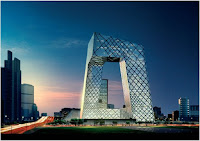 vernment by 1980, and began opening up China to the rest of the world. The Chinese economy began to grow as foreign investment was brought back to China, and the quality of life in China began to drastically improve.
China Today
The opening up of China is perhaps the beginning of the road to the 2008 Beijing Olympics. The Chinese government began in 1978 with a speech by Deng Xiaoping, who urged the government not to guide the country by ideology, but by facts and economic development. Since then, the Chinese economy has grown at an average of 9% a year--that means that every 8 years, it doubles! 400 million Chinese have moved out of poverty. That's a monumental change from the time of Mao.
Today, the 20 fastest growing cities in the world are all in China as people move to the large cities in Eastern China. For example, Chongqing expands by 300,000 people every year. This transformation is only accelerated by China's preparation for the Olympics. The world's largest airport terminal is in Beijing (it opened this past spring, and the area of Terminal 3 in Beijing Capital Airport is larger than that of the Pentagon). Beijing also has 6 new subway lines, a 43-kilometer light rail system, and a 12 square kilometer Olympic Park. Every international businessman has their own statistic regarding China and their brand new impact on the world.
China, a country of 1.3 billion people, has emerged as one of the biggest economies in the world, and is asserting itself as such. The Beijing Olympics are a testament to everything that it's done in the past 30 years, and everything it hopes to accomplish in the future. It is, in that light, a small wonder that China has done so much to make these Games absolutely perfect.
The measures it has taken are drastic. It has created the Beijing Weather Modification Office, armed with equipment and science to prevent it from raining during the Games--and especially during the Opening Ceremonies. It has clamped down on giving out visas, in hopes of preventing dissidents from protesting sensitive issues like Tibet and Taiwan. It has taken 60% of the cars off the street and shut down hundreds of Beijing factories in order to halt pollution, something the International Olympic Committee has been worried about.
The Chinese Government
The Chinese government controls the country in a one-party system of communism. It is now one of five communist countries in the world (along with Laos, Vietnam, Cuba, and North Korea. It is ironic that we had armed conflicts with three out of the five remaining communist countries specifically to stop the spread of communism). Political dissidents are silenced, and China has been repeatedly accused of human rights violations, especially with regards to Tibet. Officially, the Chinese government is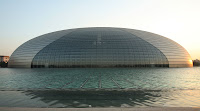 atheistic, but it recognizes certain religions organizations, while trying to suppress unrecognized religions. Clearly, the Chinese views the rights of its citizens slightly different than, say the United States, but before we reject their views, it is interesting to note that 86% of the Chinese say their country is moving in the right direction. Try finding 86% of Americans to agree on anything!
It certainly will be an interesting experience to see what Beijing has in store for us: elaborate gardens, an enormous airport terminal, brand new buildings such as the Bird's Nest, the Water Cube, the CCTV tower (pictured above), and the National Theater (also pictured). Who knows what the Chinese have in store for us? We have a little over a week to find out!!
4000 Years of Chinese History in Two Paragraphs
Chinese civilizations is one of the oldest in history, as Chinese history dates back to roughl
 y 2100 B.C.E. The first recorded dynasty is the Xia Dynasty (don't worry! I'm not going to go through all the Chinese dynasties...), though historians debate whether or not it actually existed. We do know that the Shang dynasty did exist from about 1600 B.C.E. to 1100 B.C.E. in northeastern China. The first Chinese emperor ruled from 221 B.C.E. to 210 B.C.E., named Qin Shi Huang. He was the first to build the Great Wall, and also built the famous terra-cotta warriors (shown).
The Tang Dynasty is perhaps the high point of traditional Chinese culture. When the Mongols took over China, they formed the Yuan dynasty and made Beijing their capital. Later, the Ming dynasty established Beijing as its capital, and laid out the city in its current form. For periods totalling about 350 years between 1425 and 1825, Beijing was the world's largest city. Since then, Beijing has become China's cultural and historical (as well as political) capital and is now China's second largest city. The largest, Shanghai, has become the unofficial economic capital of China.
Modern China
The past 100 years have been very tumultuous for the country of China. At the turn of the 20th century, China was severely weaked by western powers looking to exploit China for its own uses. The Boxer Rebellion and the Opium Wars greatly reduced the power of the once-strong Chinese government and strengthed the power of foreigners. Rebellion and revolution led by the Chinese leaders Sun Yat-Sen and Chiang Kai-Shek kept China in a state of political uncertainty, and the Communists forces in China who had once allied with Sun Yat-Sen were kicked out and sent on what became known as the long march. They reorganized in the 1930's under Mao Zedong.
In 1931, the Japanese invaded China, and weren't kicked out until 1945. There is still bitterness between the two countries over the atrocities committed against the Chinese people by the Japenese. Perhaps the most notable atrocity is "The Rape of Nanking", where 300,000 Chinese in Nanking were killed by the Japenese. After the Second World War, the Communists lead by Mao took over China, and Chiang Kai-Shek's government fled to Taiwan. To this day, that government claims to be the legitimate China (known as the Republic of China, as opposed to the People's Republic of China).
Mao established his government, and supported a total overhall of the status quo. The Great Leap Forward essentially reversed the classes, but had the unfortunate side effect of taking a step backward in agricultural output, causing famine and the death of 30 million Chinese between 1958 and 1961. During this time, China closed itself off to foreign investment (a fact that's certainly hard to believe, in light of everything that is "Made in China" that we see!).
1966 saw the start of the Cultural Revolution, which was nothing short of a dark period in Chinese history. It perhaps was the pinnacle of trying to achieve the egalitarian, communist society, but was so repressive that transportation and education came to a halt. Measures were instituted that took even high ranking government officials such as Deng Xiaoping out as counter-revolutionaries, changed stoplights so that "red" meant "go", and repression of traditional Chinese culture.
With the death of Mao in 1976, Deng Xiaoping took control of the Chinese go
 vernment by 1980, and began opening up China to the rest of the world. The Chinese economy began to grow as foreign investment was brought back to China, and the quality of life in China began to drastically improve.
China Today
The opening up of China is perhaps the beginning of the road to the 2008 Beijing Olympics. The Chinese government began in 1978 with a speech by Deng Xiaoping, who urged the government not to guide the country by ideology, but by facts and economic development. Since then, the Chinese economy has grown at an average of 9% a year--that means that every 8 years, it doubles! 400 million Chinese have moved out of poverty. That's a monumental change from the time of Mao.
Today, the 20 fastest growing cities in the world are all in China as people move to the large cities in Eastern China. For example, Chongqing expands by 300,000 people every year. This transformation is only accelerated by China's preparation for the Olympics. The world's largest airport terminal is in Beijing (it opened this past spring, and the area of Terminal 3 in Beijing Capital Airport is larger than that of the Pentagon). Beijing also has 6 new subway lines, a 43-kilometer light rail system, and a 12 square kilometer Olympic Park. Every international businessman has their own statistic regarding China and their brand new impact on the world.
China, a country of 1.3 billion people, has emerged as one of the biggest economies in the world, and is asserting itself as such. The Beijing Olympics are a testament to everything that it's done in the past 30 years, and everything it hopes to accomplish in the future. It is, in that light, a small wonder that China has done so much to make these Games absolutely perfect.
The measures it has taken are drastic. It has created the Beijing Weather Modification Office, armed with equipment and science to prevent it from raining during the Games--and especially during the Opening Ceremonies. It has clamped down on giving out visas, in hopes of preventing dissidents from protesting sensitive issues like Tibet and Taiwan. It has taken 60% of the cars off the street and shut down hundreds of Beijing factories in order to halt pollution, something the International Olympic Committee has been worried about.
The Chinese Government
The Chinese government controls the country in a one-party system of communism. It is now one of five communist countries in the world (along with Laos, Vietnam, Cuba, and North Korea. It is ironic that we had armed conflicts with three out of the five remaining communist countries specifically to stop the spread of communism). Political dissidents are silenced, and China has been repeatedly accused of human rights violations, especially with regards to Tibet. Officially, the Chinese government is
 atheistic, but it recognizes certain religions organizations, while trying to suppress unrecognized religions. Clearly, the Chinese views the rights of its citizens slightly different than, say the United States, but before we reject their views, it is interesting to note that 86% of the Chinese say their country is moving in the right direction. Try finding 86% of Americans to agree on anything!
It certainly will be an interesting experience to see what Beijing has in store for us: elaborate gardens, an enormous airport terminal, brand new buildings such as the Bird's Nest, the Water Cube, the CCTV tower (pictured above), and the National Theater (also pictured). Who knows what the Chinese have in store for us? We have a little over a week to find out!!
Sunday, July 20, 2008
An Olympic History
So for lack of any important news, I thought I'd discuss a brief history of the Olympics. It's a tradition that dates back over 2500 years, though certainly not in its present form. Thus, without further ado, I present: "An Olympic History."
The Ancient Olympics
The birth of the Olympiad was in Olympia, Greece, in the year 776 B.C.E. (forgive the political correctness). Depending on which myth you subscribe to, the origin of the Olympics was when Heracles (or Hercules) won a race at Olympia. Because of his athletic prowess, he decreed that the games should be held every four years. And they were--for nearly 1200 years--until it was stamped out by overzealous Christian rulers in the late Roman Empire. In any case, some of the events featured were running (several different lengths and styles), boxing, wrestling, and pentathlon (wrestling, a short sprint, long jump, javelin throw, and discus throw). It is interesting to note that while all 5 of the events remain in the Olympics, none of them are included in the modern pentathlon (the running race is now 3 miles, as opposed to about 200 yards...the only clear resemblance.
Rebirth
In 1896, less then 250 athletes from around the world gathered in Athens, Greece for the Games of the I Olympiad. Winners were given a silver medal and an olive branch. The United States won 11 gold medals, the most of any country. Events featured included swimming (in the open sea), gymnastics, wrestling, and cycling.
Four years later, in Paris 1900, women were allowed to compete for the first time. Some odd events in that games included pigeon shooting (imagine how that would go over today!), equestrian long jump, and a swimming obstacle course. The Games of the III Olympiad were the first to be featured in the United States, as they were held in St. Louis, and they were also the first to feature gold, silver, and bronze medals for first, second, and third places. The United States won 79 gold medals (the second-place countries--Germany, Canada, and Cuba--had 4 gold medals each), partly due to the fact that less than half of the events featured non-Americans.
The 1908 games in London featured winter events, though it would be 1924 (in Chamonix, France) that there would officially be a Winter Olympics. The 1916 Games were to be held in Berlin, Germany. Unfortunately, the first of two World Wars put the Olympics on the back burner, and this Olympiad was canceled. It was for the 1928 Amsterdam games that the Olympic flame was first lit, though it was Hitler's 1936 Berlin games that first featured a torch relay. For that reason, some feel that the dubious origins of that Olympic tradition merits its removal.
The 1932 Games were held in the height of the Great Depression in Los Angeles. Two demonstration sports, lacrosse and American football, were played here, though obviously, they have not continued. An interesting story about these games is that the Brazilian national team had 69 members who tried to compete. However, Brazil was so devastated from the Depression that they sent their athletes on barges with 25 tons of coffee to sell to ports as they went. They made only $24, far less than the $1 head tax for someone entering the United States. The Brazilian consulate in San Francisco, in a last-ditch effort, sent a check to Los Angeles originally worth about $45, but because the Brazilian currency was so devalued, it was only worth $17 by the time it reached Los Angeles. In any case, the check bounced, and only 24 Brazilian athletes were able to compete.
The 1940 Games (to be held in Tokyo and later, Helsinki) and the 1944 Games (to be held in London) were both canceled as a result of World War II in Europe. The 1936 Games had been tainted with the Nazi ideology, as Hitler and his party were trying to prove his idea of a master race. That Olympiad was also the same one that the African-American Jesse Owens won four gold medals with Adolph Hitler in attendance.
The Olympics During the Cold War
The first post World War II Olympiad was held in London in 1948. Four years later, a country from the USSR appeared in the Games, and Isarel also made its Olympic debut (they had been fighting a war of independence during the 1948 Games). The 1960 Games featured CBS broadcasting the events in the United States from Rome for a sum of $394,000. Four years later, when the Games were in Tokyo, the events broadcast were the first to be broadcast over the Pacific, as it used a geostationary satelite.
The 1972 Games in Munich was overshadowed by the tragedy that happened. 11 Israeli athetes were taken hostage by Palestinian terrorists. An attempt to extract the hostages failed, and all 11 Israelis were killed. 5 of the 8 Palestianian terrorist were killed, and 2 others were later reportedly killed by the Mossad. The other remains alive and in hiding to this day. This also happened to be the year that Mark Spitz won his seven gold medals--a feat that will certainly be in jeopardy this year in Beijing.
The 1976, 1980, and 1984 Games were all marked by boycotts. Taiwan boycotted the 1976 Games in Montreal because Canada recognized mainland China as a country. The 1980 Games in Moscow were boycotted by the United States and its allies as result of the Soviet invasion of Afghanistan. The Soviets retaliated in 1984 by boycotting the Los Angeles games, though with much less success (Romania, part of the Soviet bloc, competed, and Communist People's Republic of China competed for the first time). 1984 was the first time that Dara Torres, a member of the 2008 United States Olympic Team, competed at the Olympics.
I suppose it's hard to believe that I was born during the Cold War, but since I was born before the Berlin Wall fell and before the breakup of the Soviet Union, the 1988 Games in Seoul (ending less than two weeks before I was born) still qualify as an Olympiad during the Cold War. It was the largest contingent of countries in Olympic history (160), and featured much less of the boycotts that had stained the previous three Olympiads.
Olympics in Recent Times
The 1992 Barcelona Games featured the United States "Dream Team" in basketball: Michael Jordan, Magic Johnson, Charles Barkley, and Larry Bird. Obviously, they brought home the gold medal. The 1996 Games in Atlanta are the first that I remember, so for me, these events are less history and more experience (if indeed there is a difference). In any case, the past three Olympics, 2000 in Sydney, and 2004 in Athens, all have moments that are etched on our memories: Kerri Strug's one foot landing, Michael Johnson's sweep of the 200 and 400, Ian Thorpe of Australia and his impressive two golds in one night, Michael Phelps' eight medals, Paul Hamm's victory in the men's gymnastics all-around (a first for the Americans), etc.
One can hope--and even expect--that the Beijing Olympics this year will be no less spectacular than any of its predecessors. The modern Olympics have been played for over a century now, and yet it has lost none of its spectacle. In fact, it has vaulted from humbled beginnings in Paris to the grand world stage it now is.
The Ancient Olympics
The birth of the Olympiad was in Olympia, Greece, in the year 776 B.C.E. (forgive the political correctness). Depending on which myth you subscribe to, the origin of the Olympics was when Heracles (or Hercules) won a race at Olympia. Because of his athletic prowess, he decreed that the games should be held every four years. And they were--for nearly 1200 years--until it was stamped out by overzealous Christian rulers in the late Roman Empire. In any case, some of the events featured were running (several different lengths and styles), boxing, wrestling, and pentathlon (wrestling, a short sprint, long jump, javelin throw, and discus throw). It is interesting to note that while all 5 of the events remain in the Olympics, none of them are included in the modern pentathlon (the running race is now 3 miles, as opposed to about 200 yards...the only clear resemblance.
Rebirth
In 1896, less then 250 athletes from around the world gathered in Athens, Greece for the Games of the I Olympiad. Winners were given a silver medal and an olive branch. The United States won 11 gold medals, the most of any country. Events featured included swimming (in the open sea), gymnastics, wrestling, and cycling.
Four years later, in Paris 1900, women were allowed to compete for the first time. Some odd events in that games included pigeon shooting (imagine how that would go over today!), equestrian long jump, and a swimming obstacle course. The Games of the III Olympiad were the first to be featured in the United States, as they were held in St. Louis, and they were also the first to feature gold, silver, and bronze medals for first, second, and third places. The United States won 79 gold medals (the second-place countries--Germany, Canada, and Cuba--had 4 gold medals each), partly due to the fact that less than half of the events featured non-Americans.
The 1908 games in London featured winter events, though it would be 1924 (in Chamonix, France) that there would officially be a Winter Olympics. The 1916 Games were to be held in Berlin, Germany. Unfortunately, the first of two World Wars put the Olympics on the back burner, and this Olympiad was canceled. It was for the 1928 Amsterdam games that the Olympic flame was first lit, though it was Hitler's 1936 Berlin games that first featured a torch relay. For that reason, some feel that the dubious origins of that Olympic tradition merits its removal.
The 1932 Games were held in the height of the Great Depression in Los Angeles. Two demonstration sports, lacrosse and American football, were played here, though obviously, they have not continued. An interesting story about these games is that the Brazilian national team had 69 members who tried to compete. However, Brazil was so devastated from the Depression that they sent their athletes on barges with 25 tons of coffee to sell to ports as they went. They made only $24, far less than the $1 head tax for someone entering the United States. The Brazilian consulate in San Francisco, in a last-ditch effort, sent a check to Los Angeles originally worth about $45, but because the Brazilian currency was so devalued, it was only worth $17 by the time it reached Los Angeles. In any case, the check bounced, and only 24 Brazilian athletes were able to compete.
The 1940 Games (to be held in Tokyo and later, Helsinki) and the 1944 Games (to be held in London) were both canceled as a result of World War II in Europe. The 1936 Games had been tainted with the Nazi ideology, as Hitler and his party were trying to prove his idea of a master race. That Olympiad was also the same one that the African-American Jesse Owens won four gold medals with Adolph Hitler in attendance.
The Olympics During the Cold War
The first post World War II Olympiad was held in London in 1948. Four years later, a country from the USSR appeared in the Games, and Isarel also made its Olympic debut (they had been fighting a war of independence during the 1948 Games). The 1960 Games featured CBS broadcasting the events in the United States from Rome for a sum of $394,000. Four years later, when the Games were in Tokyo, the events broadcast were the first to be broadcast over the Pacific, as it used a geostationary satelite.
The 1972 Games in Munich was overshadowed by the tragedy that happened. 11 Israeli athetes were taken hostage by Palestinian terrorists. An attempt to extract the hostages failed, and all 11 Israelis were killed. 5 of the 8 Palestianian terrorist were killed, and 2 others were later reportedly killed by the Mossad. The other remains alive and in hiding to this day. This also happened to be the year that Mark Spitz won his seven gold medals--a feat that will certainly be in jeopardy this year in Beijing.
The 1976, 1980, and 1984 Games were all marked by boycotts. Taiwan boycotted the 1976 Games in Montreal because Canada recognized mainland China as a country. The 1980 Games in Moscow were boycotted by the United States and its allies as result of the Soviet invasion of Afghanistan. The Soviets retaliated in 1984 by boycotting the Los Angeles games, though with much less success (Romania, part of the Soviet bloc, competed, and Communist People's Republic of China competed for the first time). 1984 was the first time that Dara Torres, a member of the 2008 United States Olympic Team, competed at the Olympics.
I suppose it's hard to believe that I was born during the Cold War, but since I was born before the Berlin Wall fell and before the breakup of the Soviet Union, the 1988 Games in Seoul (ending less than two weeks before I was born) still qualify as an Olympiad during the Cold War. It was the largest contingent of countries in Olympic history (160), and featured much less of the boycotts that had stained the previous three Olympiads.
Olympics in Recent Times
The 1992 Barcelona Games featured the United States "Dream Team" in basketball: Michael Jordan, Magic Johnson, Charles Barkley, and Larry Bird. Obviously, they brought home the gold medal. The 1996 Games in Atlanta are the first that I remember, so for me, these events are less history and more experience (if indeed there is a difference). In any case, the past three Olympics, 2000 in Sydney, and 2004 in Athens, all have moments that are etched on our memories: Kerri Strug's one foot landing, Michael Johnson's sweep of the 200 and 400, Ian Thorpe of Australia and his impressive two golds in one night, Michael Phelps' eight medals, Paul Hamm's victory in the men's gymnastics all-around (a first for the Americans), etc.
One can hope--and even expect--that the Beijing Olympics this year will be no less spectacular than any of its predecessors. The modern Olympics have been played for over a century now, and yet it has lost none of its spectacle. In fact, it has vaulted from humbled beginnings in Paris to the grand world stage it now is.
Saturday, July 5, 2008
The Olympic Trials in Review
So here's a list of my top 10 events that occurred at this year's Olympic Trials:
- Michael Phelps and Katie Hoff: Each had five chances to make it to Beijing. Each succeeded in all 5. Phelps will go for 8 golds (including three relays), and leaves Omaha undefeated in all his races. Hoffwill compete for 6 golds, and is the "female Phelps".
- Dara Torres: at 41, setting an American record and qualifying in 2 events as the oldest swimmer to make the US Olympic team
- Tyson Gay (1): He ran the fastest (wind-aided) 100m dash in history at 9.68 seconds
- Brendan Hansen: A month ago, Hansen was the world record in the 200m breastroke until Kosuke Kitajima took it away. Hansen wound up 4th in this event, and will have one shot at Olympic gold in the 100
- Tyson Gay (2): Unfortunately, the world champion in the 200m dash isn't going to be competing for a medal in that event, since he fell during the quarterfinals of the 200m dash and strained his hamstring
- Cullen Jones: is the first fully African-American to make the US Olympic Team in a long white-dominated sport. Perhaps we'll see the first African-American president this year too.
- Aaron Piersol: The Texan backstroker set one world record and tied another in his two events to lock up those two events in Beijing. There's no doubt
- Jeremy Wariner: Heavily favored to win, he placed second in the finals of the 400m dash. He will, however, make the Olympic team and look to break Michael Johnson's record in that race.
- Gary Hall, Jr.: One of the most interesting swimming figures, missed the Olympics completely after not placing in the top two in the 5om freestyle.
- Elaine Breeden: For me, this is easily the biggest event (and so a good one to end on), since she qualified in both the 100m and 200m butterfly
The final weekend of Olympic Trials
Well, here are a few notes regarding the Olympic Trials. First, if you've missed it all week, it's going to be shown live tonight on NBC from 5pm to 6pm (Track and Field) and from 8pm to 9pm (Swimming). Tonight will feature the finals of the men's 50m freestyle, the finals of the men's 100m butterfly (Michael Phelps' last race of the trials), the semifinals of the women's 50m freestyle, the finals of the women's 200m backstroke and the finals of the women's 800 freestyle.
Last night was quite a spectacle at Trials. Michael Phelps set the world record in the finals of the men's 200m IM, with Ryan Lochte swimming a close second less than a half hour after getting out-touched at the wall by Aaron Piersol in the 200m backstroke. "Out-touched" is perhaps a misnomer, since Piersol beat Lochte by 0.02 seconds. Piersol tied the world record in that event--the world record also held by Ryan Lochte. Dara Torres took second place in the women's 100m freestyle. It will be her fifth Olympics, which is incredible to begin with. However, it's even more incredible when you consider that she's skipped two Olympics since her first Olympics in 1984 (the 1996 games in Atlanta and the 2004 games in Athens). She is 41 years old (with a 2-year-old daughter as well). The word "supermom" takes a whole new meaning.
It's been a fantastic week watching the Olympic Trials (especially for me!), and it looks like the United States will bring a very strong contingent of athletes to Beijing in swimming, led by the versatile swimmers Michael Phelps, Ryan Lochte, Katie Hoff, and Natalie Coughlin.
In other (non-Olympic) sports news, the Williams sisters, Venus and Serena, met in the ladies' finals of Wimbledon, with Venus winning the first two sets to claim the match and her fifth win at Wimbledon. Roger Federer and Rafael Nadal play tomorrow for the gentlemen's title. Also, the Tour de France starts today.
Anyway, I may have one more post about Olympic Trials, but in the next month before the Olympics start, I'll try to keep this blog updated with interesting tidbits about the Olympics, Beijing, and the United States Olympic Team.
UPDATE Tyson Gay, the defending world champion in the 200m dash, will not be going to Beijing in that event. He went down running in the quarterfinals of that event after suffering what looks to be a severe cramp. He has already qualified in the 100m dash, but the severity of the injury is not known, and it's possible he might not make it to Beijing. However, at this point, that doesn't look likely.
Last night was quite a spectacle at Trials. Michael Phelps set the world record in the finals of the men's 200m IM, with Ryan Lochte swimming a close second less than a half hour after getting out-touched at the wall by Aaron Piersol in the 200m backstroke. "Out-touched" is perhaps a misnomer, since Piersol beat Lochte by 0.02 seconds. Piersol tied the world record in that event--the world record also held by Ryan Lochte. Dara Torres took second place in the women's 100m freestyle. It will be her fifth Olympics, which is incredible to begin with. However, it's even more incredible when you consider that she's skipped two Olympics since her first Olympics in 1984 (the 1996 games in Atlanta and the 2004 games in Athens). She is 41 years old (with a 2-year-old daughter as well). The word "supermom" takes a whole new meaning.
It's been a fantastic week watching the Olympic Trials (especially for me!), and it looks like the United States will bring a very strong contingent of athletes to Beijing in swimming, led by the versatile swimmers Michael Phelps, Ryan Lochte, Katie Hoff, and Natalie Coughlin.
In other (non-Olympic) sports news, the Williams sisters, Venus and Serena, met in the ladies' finals of Wimbledon, with Venus winning the first two sets to claim the match and her fifth win at Wimbledon. Roger Federer and Rafael Nadal play tomorrow for the gentlemen's title. Also, the Tour de France starts today.
Anyway, I may have one more post about Olympic Trials, but in the next month before the Olympics start, I'll try to keep this blog updated with interesting tidbits about the Olympics, Beijing, and the United States Olympic Team.
UPDATE Tyson Gay, the defending world champion in the 200m dash, will not be going to Beijing in that event. He went down running in the quarterfinals of that event after suffering what looks to be a severe cramp. He has already qualified in the 100m dash, but the severity of the injury is not known, and it's possible he might not make it to Beijing. However, at this point, that doesn't look likely.
Thursday, July 3, 2008
Day 5 at the Olympic Trials
 Well, tonight is the fifth night of the Olympic trials, and the night that Elaine will try to secure her second spot on the United States Olympic team. Standing in her way will be Mary Descensa, Kathleen Hersey, and Kim Vandenburg, all very capable swimmers. I'll be updating this blog throughout the evening, so stay tuned. Elaine's event will be broadcast live on USA, or you can watch it online. This link will have the video posted at 8pm eastern.
As a recap, earlier today Michael Phelps placed second overall in the prelims of the 200 IM, an event that he holds the world record in. Rebecca Soni recorded the top time in the 200m breastroke, and 3-time Olympian Amanda Beard placed third. The semifinals for both events will be tonight, and the finals tomorrow night. The finals for the 100m freestyle will also be tonight, as will the finals for the men's 200m breastroke, featuring Brendan Hansen, who will try to take back Kosuke Kitajima's month-old world record. In any case, tonight should be a good night for swimming!
UPDATE Congratulations to Elaine Breeden!! She won the 200m butterfly, and will be heading to Beijing in three events--both the 100m and 200m butterfly as well as the 4x100 medley relay. In other updates, Lochte and Piersol look to be going strong for the 200 backstroke tomorrow night. Lochte is also going against Phelps in the 200 IM, both of whom easily won their semifinal heats. Cullen Jones, the first African-American to hold a world record, qualified for the 4x100 freestyle relay. Dara Torres moved to the finals with one of the top times in the 100m freestyle with her old school underwater technique. The shocker of the night was Brendan Hansen, the world record holder a month ago in the 200m breastroke, missing out on the Olympics in that event. Assuredly, the Japanese are celebrating, as Hansen is the biggest threat to Kitajima bringing home gold in the 200m breaststroke.
In any case, it looks like we've got a swimming schedule chock full of great events, from the semifinals of the men's 200m IM, the finals of the men's 100m freestyle, the finals of the women's 200m butterfly, and the 4x200 women's freestyle relay. It looks like it'll be a great trip!!!
Subscribe to:
Posts (Atom)