Dad and I leave tomorrow morning at 10:08 a.m. We'll arrive in Beijing at 8:05 p.m., Beijing time the following day. I'll try to post to this blog, complete with pictures and results, as often as I can while I'm in Beijing.
Elaine swims tomorrow morning in the heats of the 200m butterfly. The semifinals for that event is tomorrow evening, with coverage on NBC beginning at 10pm. The following night at the same time on NBC, the finals will be broadcast live. We have tickets for the finals of that event.
Monday, August 11, 2008

Sunday, August 10, 2008
Another Exciting Day at the Olympics
 Close to a billion people watched the basketball game between the United States in China, a game that the United States ended up winning easily, 101-70. That makes it one of the most widely-watched basketball games of all time. For comparison, just under 20 million people watched this year's NCAA national championship game in the United States.
The United States broke the world record in the men's 4x100 freestyle relay--in the prelims. However, even though they replaced their three slowest swimmers with three of the world's fastest 100m freestylers, including Michael Phelps, the French team, seeded second in the finals, was the overwhelming favorite to win. And indeed, despite a fast start by the Australians (and Phelps setting the American record in the 100m freestyle to lead things off), the French opened a wide lead over the Americans. Jason Lezak dove in about a body length behind the world record holder, Alain Bernard. With 25 meters to go, it looked as if the French would win it. And then came Lezak: he started inching closer to Bernard, came up right next to him right at the wall, and outtouched him by 8 hundredths of a second for the gold medal. Phelps now is a part of two out of the three American gold medals.
More tomorrow: my last full day in the States!
Saturday, August 9, 2008
Olympics: 100m butterfly semis
Well, first a brief recap of other action. Misty May-Treanor and Kerri Walsh start off NBC's live prime time coverage as the defending gold medalists in the women's beach volleyball (I ought to reference my previous blog regarding my thoughts as to why NBC is airing beach volleyball on primetime). The Americans easily won in two sets.
Also, Michael Phelps kicked off the evening in the men's 400m IM against good friend Ryan Lochte. Phelps was dominant in what was said to possibly be his toughest individual event, winning the gold medal and breaking his own world record in the process. Lochte, though he was even with Phelps at the beginning of the breastroke, Phelps' weakest stroke, he fell to third and the bronze medal.
And finally, regarding Elaine Breeden. While being seeded sixth going into the semifinals, she was about a half second off her prelim time, and ended up tying for sixth in her heat. Unfortunately, that wouldn't be enough to make it to the finals. Fellow American Christine Magnuson managed to break the American record, and will have a solid shot at a medal tomorrow night in the finals.
Elaine's next race will be on Tuesday night, Beijing time in the prelims of the 200 fly.
Also, Michael Phelps kicked off the evening in the men's 400m IM against good friend Ryan Lochte. Phelps was dominant in what was said to possibly be his toughest individual event, winning the gold medal and breaking his own world record in the process. Lochte, though he was even with Phelps at the beginning of the breastroke, Phelps' weakest stroke, he fell to third and the bronze medal.
And finally, regarding Elaine Breeden. While being seeded sixth going into the semifinals, she was about a half second off her prelim time, and ended up tying for sixth in her heat. Unfortunately, that wouldn't be enough to make it to the finals. Fellow American Christine Magnuson managed to break the American record, and will have a solid shot at a medal tomorrow night in the finals.
Elaine's next race will be on Tuesday night, Beijing time in the prelims of the 200 fly.
Olympics: 100m butterfly prelims
Can I just say right now how much I hate NBC? They advertise that they're broadcasting thousands of hours of the Olympics online. Which is great, right? Except that doesn't include swimming, because they'll show the prelims delayed this afternoon. At least they'll show them live tonight. However, if you want to see badminton, cycling, or equestrian, you're all set.
Thus, I dutifully got up this morning to see Elaine's swim online at about 7am this morning. No live feed. The best I got was the results of the heats. She managed to place 6th in the field of 49 with a time of 56:06, easily getting her to the semifinals. Jessicah Schipper of Australia won the heat with a time that is almost a half second faster than Elaine's. She's definitely the favorite to win gold in Beijing in this event.
She'll swim again tonight (well, in Beijing it'll be tomorrow morning), at a little after 10pm Eastern time. The swimming event starts at 10, and Michael Phelps will start his quest for 8 gold medals first, with the finals of the 400m IM (which he set an Olympic record in this morning). Elaine will probably swim in the second race of the evening, in heat 1 of the semifinals in lane 3.
Edit: Elaine will indeed be in heat 1 in lane 3, right next to fellow American Christine Magnuson in lane 4. Expect it to be at about 10:10 EDT.
Thus, I dutifully got up this morning to see Elaine's swim online at about 7am this morning. No live feed. The best I got was the results of the heats. She managed to place 6th in the field of 49 with a time of 56:06, easily getting her to the semifinals. Jessicah Schipper of Australia won the heat with a time that is almost a half second faster than Elaine's. She's definitely the favorite to win gold in Beijing in this event.
She'll swim again tonight (well, in Beijing it'll be tomorrow morning), at a little after 10pm Eastern time. The swimming event starts at 10, and Michael Phelps will start his quest for 8 gold medals first, with the finals of the 400m IM (which he set an Olympic record in this morning). Elaine will probably swim in the second race of the evening, in heat 1 of the semifinals in lane 3.
Edit: Elaine will indeed be in heat 1 in lane 3, right next to fellow American Christine Magnuson in lane 4. Expect it to be at about 10:10 EDT.
Friday, August 8, 2008
The Olympics are here!
 Right now I'm sitting in front of my TV watching the Opening Ceremony on NBC. $100 million and 8 months of preparation later, we witnessed an incredible spectacle. The choreography was spectacular, flowing together in a moving sight. The performers themselves--all 2008 of them--had their movements down perfectly. Perhaps what impressed me the most was the colors they employed: whether it be in the fireworks (by the way: at the beginning, fireworks in the shape of footprints "walked" 29 paces from central Beijing out along the grid pattern to the Olympic Stadium), the projected images on the screen surrounding the stadium, or the LED lights constantly in play. It was a truly awesome sight to watch
Once the ceremony got over with, the parade of nations began. Without the beautiful and entrancing choreography of Zhang Yimou's artistic portion of the ceremony, it lacked the catch that the Chinese had previously displayed (George Bush, for one, looked a little bored--and hot--at the Games), but nonetheless, it is neat to see so many stories, so many histories, and so much national pride walking by. As Bob Costas and Matt Lauer (the oft-joking commentators of the ceremony) duly noted, the Opening Ceremony is, for many of these athletes, their one chance at Olympic glory. After all, we may never hear about the athletes from Kiribati, Tajikistan, or the Maldives, but they are there to represent their country. It is also interesting to see the people coming out of countries that are truly suffering: Zimbebwe, wracked by political distress; North Korea, whose athletes live in the most closed country in the world; or the Iranian female athletes, head coverings and all.
Yao Ming, star NBA basketball player, led the Chinese team into the Beijing National Stadium, followed by Chinese President Hu Jintao opening the XXIX Olympiad. Li Ning, the winner of six gold medals, was the final torch-bearer, who literally rose into the sky, ran around the top of the stadium on a wire, and lit the Olympic Torch, followed by a massive display of fireworks over National Stadium and Beijing. It was hard to imagine the torch lighting being able to top the artistic portion of the ceremony, but it did. The Olympic Opening Ceremony was a magnificent event, and got the 17-day Olympics off to a fantastic start.
As a final note, this ceremony is extra special for me for two reasons. First, having a friend among the US Olympic team makes me even more proud of my nation's Olympic Team. I'm sure it is a sense of pride for each of the nations watching their Olympic team walk into Beijing National Stadium--and not the least for the Chinese, who are watching their national dream come true. Second, I'm watching events unfold in a stadium that I will be sitting in just a little over a week from now. Given that, how can I not enjoy it!?
I'll be posting more posts as the week goes on, highlighting some of the big Olympic events, and my final preparations for Beijing.
Tuesday, August 5, 2008
Almost there!
 In just three days, the world will watch as China executes its dance onto the world stage. The Opening Ceremony begins on August 8, 2008 (that's 08/08/08) at, fittingly, 8:08 pm. Here stateside, that will be 8:08 a.m. In order to further confuse us, the Opening Ceremony will be tape-delayed on NBC at 7:30 p.m., for its Friday night prime time slot. It will be at the National Stadium, which is pictured to the right.
As for our journey to Beijing, we leave on the 12th, so we'll be in town for some of the first few events, including Elaine's 100m butterfly (through the finals). The prelims for her event are the morning we leave for Beijing, and the semifinals will take place while we're over the Pacific Ocean.
Speaking of which, the US Olympic Team has arrived in Beijing. Several cyclists created controversy when they wore masks off the airplane (do, of course, to the notorious Beijing pollution). About month ago, Jessica Hardy was looking forward to her first Olympic Games in freestyle and breaststroke. However, she tested positive for banned substances, and will not be competing this year in Beijing. One cannot imagine how crushing that would be for the athlete, as well as the athletes who came in third at Olympic Trials, but are unable to compete, as the deadline has already past.
I'll be posting more often, now that the Games are so close. Hopefully I'll be able to keep this blog updated from Beijing with pictures and perhaps a few videos. It's almost here!
Sunday, August 3, 2008
A Tour of Beijing
So what is Beijing like? In fact, what is China like? Well, to be quite honest, I don't really know, seeing as how I haven't yet been there. However, China's role in the world is fascinating, and I'd like to take a brief tour of Chinese history and then take a look at what modern China (with particular emphasis on Beijing, obviously) is like.
4000 Years of Chinese History in Two Paragraphs
Chinese civilizations is one of the oldest in history, as Chinese history dates back to roughl y 2100 B.C.E. The first recorded dynasty is the Xia Dynasty (don't worry! I'm not going to go through all the Chinese dynasties...), though historians debate whether or not it actually existed. We do know that the Shang dynasty did exist from about 1600 B.C.E. to 1100 B.C.E. in northeastern China. The first Chinese emperor ruled from 221 B.C.E. to 210 B.C.E., named Qin Shi Huang. He was the first to build the Great Wall, and also built the famous terra-cotta warriors (shown).
The Tang Dynasty is perhaps the high point of traditional Chinese culture. When the Mongols took over China, they formed the Yuan dynasty and made Beijing their capital. Later, the Ming dynasty established Beijing as its capital, and laid out the city in its current form. For periods totalling about 350 years between 1425 and 1825, Beijing was the world's largest city. Since then, Beijing has become China's cultural and historical (as well as political) capital and is now China's second largest city. The largest, Shanghai, has become the unofficial economic capital of China.
Modern China
The past 100 years have been very tumultuous for the country of China. At the turn of the 20th century, China was severely weaked by western powers looking to exploit China for its own uses. The Boxer Rebellion and the Opium Wars greatly reduced the power of the once-strong Chinese government and strengthed the power of foreigners. Rebellion and revolution led by the Chinese leaders Sun Yat-Sen and Chiang Kai-Shek kept China in a state of political uncertainty, and the Communists forces in China who had once allied with Sun Yat-Sen were kicked out and sent on what became known as the long march. They reorganized in the 1930's under Mao Zedong.
In 1931, the Japanese invaded China, and weren't kicked out until 1945. There is still bitterness between the two countries over the atrocities committed against the Chinese people by the Japenese. Perhaps the most notable atrocity is "The Rape of Nanking", where 300,000 Chinese in Nanking were killed by the Japenese. After the Second World War, the Communists lead by Mao took over China, and Chiang Kai-Shek's government fled to Taiwan. To this day, that government claims to be the legitimate China (known as the Republic of China, as opposed to the People's Republic of China).
Mao established his government, and supported a total overhall of the status quo. The Great Leap Forward essentially reversed the classes, but had the unfortunate side effect of taking a step backward in agricultural output, causing famine and the death of 30 million Chinese between 1958 and 1961. During this time, China closed itself off to foreign investment (a fact that's certainly hard to believe, in light of everything that is "Made in China" that we see!).
1966 saw the start of the Cultural Revolution, which was nothing short of a dark period in Chinese history. It perhaps was the pinnacle of trying to achieve the egalitarian, communist society, but was so repressive that transportation and education came to a halt. Measures were instituted that took even high ranking government officials such as Deng Xiaoping out as counter-revolutionaries, changed stoplights so that "red" meant "go", and repression of traditional Chinese culture.
With the death of Mao in 1976, Deng Xiaoping took control of the Chinese go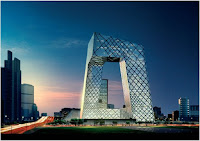 vernment by 1980, and began opening up China to the rest of the world. The Chinese economy began to grow as foreign investment was brought back to China, and the quality of life in China began to drastically improve.
China Today
The opening up of China is perhaps the beginning of the road to the 2008 Beijing Olympics. The Chinese government began in 1978 with a speech by Deng Xiaoping, who urged the government not to guide the country by ideology, but by facts and economic development. Since then, the Chinese economy has grown at an average of 9% a year--that means that every 8 years, it doubles! 400 million Chinese have moved out of poverty. That's a monumental change from the time of Mao.
Today, the 20 fastest growing cities in the world are all in China as people move to the large cities in Eastern China. For example, Chongqing expands by 300,000 people every year. This transformation is only accelerated by China's preparation for the Olympics. The world's largest airport terminal is in Beijing (it opened this past spring, and the area of Terminal 3 in Beijing Capital Airport is larger than that of the Pentagon). Beijing also has 6 new subway lines, a 43-kilometer light rail system, and a 12 square kilometer Olympic Park. Every international businessman has their own statistic regarding China and their brand new impact on the world.
China, a country of 1.3 billion people, has emerged as one of the biggest economies in the world, and is asserting itself as such. The Beijing Olympics are a testament to everything that it's done in the past 30 years, and everything it hopes to accomplish in the future. It is, in that light, a small wonder that China has done so much to make these Games absolutely perfect.
The measures it has taken are drastic. It has created the Beijing Weather Modification Office, armed with equipment and science to prevent it from raining during the Games--and especially during the Opening Ceremonies. It has clamped down on giving out visas, in hopes of preventing dissidents from protesting sensitive issues like Tibet and Taiwan. It has taken 60% of the cars off the street and shut down hundreds of Beijing factories in order to halt pollution, something the International Olympic Committee has been worried about.
The Chinese Government
The Chinese government controls the country in a one-party system of communism. It is now one of five communist countries in the world (along with Laos, Vietnam, Cuba, and North Korea. It is ironic that we had armed conflicts with three out of the five remaining communist countries specifically to stop the spread of communism). Political dissidents are silenced, and China has been repeatedly accused of human rights violations, especially with regards to Tibet. Officially, the Chinese government is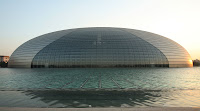 atheistic, but it recognizes certain religions organizations, while trying to suppress unrecognized religions. Clearly, the Chinese views the rights of its citizens slightly different than, say the United States, but before we reject their views, it is interesting to note that 86% of the Chinese say their country is moving in the right direction. Try finding 86% of Americans to agree on anything!
It certainly will be an interesting experience to see what Beijing has in store for us: elaborate gardens, an enormous airport terminal, brand new buildings such as the Bird's Nest, the Water Cube, the CCTV tower (pictured above), and the National Theater (also pictured). Who knows what the Chinese have in store for us? We have a little over a week to find out!!
4000 Years of Chinese History in Two Paragraphs
Chinese civilizations is one of the oldest in history, as Chinese history dates back to roughl
 y 2100 B.C.E. The first recorded dynasty is the Xia Dynasty (don't worry! I'm not going to go through all the Chinese dynasties...), though historians debate whether or not it actually existed. We do know that the Shang dynasty did exist from about 1600 B.C.E. to 1100 B.C.E. in northeastern China. The first Chinese emperor ruled from 221 B.C.E. to 210 B.C.E., named Qin Shi Huang. He was the first to build the Great Wall, and also built the famous terra-cotta warriors (shown).
The Tang Dynasty is perhaps the high point of traditional Chinese culture. When the Mongols took over China, they formed the Yuan dynasty and made Beijing their capital. Later, the Ming dynasty established Beijing as its capital, and laid out the city in its current form. For periods totalling about 350 years between 1425 and 1825, Beijing was the world's largest city. Since then, Beijing has become China's cultural and historical (as well as political) capital and is now China's second largest city. The largest, Shanghai, has become the unofficial economic capital of China.
Modern China
The past 100 years have been very tumultuous for the country of China. At the turn of the 20th century, China was severely weaked by western powers looking to exploit China for its own uses. The Boxer Rebellion and the Opium Wars greatly reduced the power of the once-strong Chinese government and strengthed the power of foreigners. Rebellion and revolution led by the Chinese leaders Sun Yat-Sen and Chiang Kai-Shek kept China in a state of political uncertainty, and the Communists forces in China who had once allied with Sun Yat-Sen were kicked out and sent on what became known as the long march. They reorganized in the 1930's under Mao Zedong.
In 1931, the Japanese invaded China, and weren't kicked out until 1945. There is still bitterness between the two countries over the atrocities committed against the Chinese people by the Japenese. Perhaps the most notable atrocity is "The Rape of Nanking", where 300,000 Chinese in Nanking were killed by the Japenese. After the Second World War, the Communists lead by Mao took over China, and Chiang Kai-Shek's government fled to Taiwan. To this day, that government claims to be the legitimate China (known as the Republic of China, as opposed to the People's Republic of China).
Mao established his government, and supported a total overhall of the status quo. The Great Leap Forward essentially reversed the classes, but had the unfortunate side effect of taking a step backward in agricultural output, causing famine and the death of 30 million Chinese between 1958 and 1961. During this time, China closed itself off to foreign investment (a fact that's certainly hard to believe, in light of everything that is "Made in China" that we see!).
1966 saw the start of the Cultural Revolution, which was nothing short of a dark period in Chinese history. It perhaps was the pinnacle of trying to achieve the egalitarian, communist society, but was so repressive that transportation and education came to a halt. Measures were instituted that took even high ranking government officials such as Deng Xiaoping out as counter-revolutionaries, changed stoplights so that "red" meant "go", and repression of traditional Chinese culture.
With the death of Mao in 1976, Deng Xiaoping took control of the Chinese go
 vernment by 1980, and began opening up China to the rest of the world. The Chinese economy began to grow as foreign investment was brought back to China, and the quality of life in China began to drastically improve.
China Today
The opening up of China is perhaps the beginning of the road to the 2008 Beijing Olympics. The Chinese government began in 1978 with a speech by Deng Xiaoping, who urged the government not to guide the country by ideology, but by facts and economic development. Since then, the Chinese economy has grown at an average of 9% a year--that means that every 8 years, it doubles! 400 million Chinese have moved out of poverty. That's a monumental change from the time of Mao.
Today, the 20 fastest growing cities in the world are all in China as people move to the large cities in Eastern China. For example, Chongqing expands by 300,000 people every year. This transformation is only accelerated by China's preparation for the Olympics. The world's largest airport terminal is in Beijing (it opened this past spring, and the area of Terminal 3 in Beijing Capital Airport is larger than that of the Pentagon). Beijing also has 6 new subway lines, a 43-kilometer light rail system, and a 12 square kilometer Olympic Park. Every international businessman has their own statistic regarding China and their brand new impact on the world.
China, a country of 1.3 billion people, has emerged as one of the biggest economies in the world, and is asserting itself as such. The Beijing Olympics are a testament to everything that it's done in the past 30 years, and everything it hopes to accomplish in the future. It is, in that light, a small wonder that China has done so much to make these Games absolutely perfect.
The measures it has taken are drastic. It has created the Beijing Weather Modification Office, armed with equipment and science to prevent it from raining during the Games--and especially during the Opening Ceremonies. It has clamped down on giving out visas, in hopes of preventing dissidents from protesting sensitive issues like Tibet and Taiwan. It has taken 60% of the cars off the street and shut down hundreds of Beijing factories in order to halt pollution, something the International Olympic Committee has been worried about.
The Chinese Government
The Chinese government controls the country in a one-party system of communism. It is now one of five communist countries in the world (along with Laos, Vietnam, Cuba, and North Korea. It is ironic that we had armed conflicts with three out of the five remaining communist countries specifically to stop the spread of communism). Political dissidents are silenced, and China has been repeatedly accused of human rights violations, especially with regards to Tibet. Officially, the Chinese government is
 atheistic, but it recognizes certain religions organizations, while trying to suppress unrecognized religions. Clearly, the Chinese views the rights of its citizens slightly different than, say the United States, but before we reject their views, it is interesting to note that 86% of the Chinese say their country is moving in the right direction. Try finding 86% of Americans to agree on anything!
It certainly will be an interesting experience to see what Beijing has in store for us: elaborate gardens, an enormous airport terminal, brand new buildings such as the Bird's Nest, the Water Cube, the CCTV tower (pictured above), and the National Theater (also pictured). Who knows what the Chinese have in store for us? We have a little over a week to find out!!
Subscribe to:
Posts (Atom)